Green
Notesbasilbergamotbigaranegalbanumgreen leavesincensejasminenerolipatchoulirhubarbsandalwoodylang-ylang
Tags
#beast
#fresh
Style
unisex
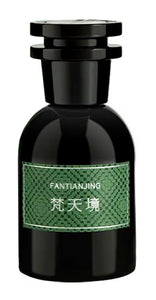
In the Hindu tradition, Brahma is the creator god, responsible for knowledge. Abode of Brahma conjures bright alertness with spiritual stillness. Starting open and alive with a luminous burst of sharp basil and tart rhubarb, it softens with the diffusive green of galbanum mixed with delicate white florals. Grounding the experience are transparent threads of incense, sandalwood and ambergris.
Perfumer: Maxime Exler
All about this fragrance
Vibe check
An open window beside a desk, the morning still undisturbed: basil and tart rhubarb give the scent a focused, wakeful edge. As flowers and incense soften that brightness, it suits an unhurried conversation at close range, with presence carried by green sharpness rather than sweetness.
How to wear
Try it in mild spring weather or on warmer days, when its herbal opening and transparent base suit lighter wear. Start with one or two sprays on skin; let the basil and galbanum settle before adding more. Applying beneath a light layer keeps the greener edge closer while allowing the softer incense and sandalwood to emerge.
Who it’s for
For those drawn to snapped-stem greenery, aromatic herbs and restrained incense rather than sweet florals or dense amber. Its contrast of tart brightness and quiet woods will appeal to wearers who enjoy a contemplative fragrance without giving up a crisp, vivid opening.
Release year
2026
The nose
Maxime Exler.
Zhiwuzhi 挚物志’s story
Zhiwuzhi interprets Eastern aromatic traditions through contemporary perfumery, with herbs, woods and medicinal plants as recurring references. Its approach favours individuality, nature and everyday wear over overt sweetness or luxury exclusivity, treating Chinese scent culture as living material rather than nostalgic decoration.
Abode of Brahma 梵天境’s concept
Abode of Brahma takes its imagery from Brahma, the Hindu creator god associated with knowledge. The composition translates that reference into a balance of alertness and stillness: sharp herbal greenery opens the senses, while soft flowers and transparent incense lend a quieter, contemplative depth.
Extra info
Abode of Brahma belongs to Zhiwuzhi’s Xuan collection. The same fragrance is also listed as Fantianjing, a romanisation of its Chinese name, 梵天境.
Notesbasilbergamotbigaranegalbanumgreen leavesincensejasminenerolipatchoulirhubarbsandalwoodylang-ylang
Tags
#beast
#fresh
Style
unisex
In the Hindu tradition, Brahma is the creator god, responsible for knowledge. Abode of Brahma conjures bright alertness with spiritual stillness. Starting open and alive with a luminous burst of sharp basil and tart rhubarb, it softens with the diffusive green of galbanum mixed with delicate white florals. Grounding the experience are transparent threads of incense, sandalwood and ambergris.
Perfumer: Maxime Exler
All about this fragrance
Vibe check
An open window beside a desk, the morning still undisturbed: basil and tart rhubarb give the scent a focused, wakeful edge. As flowers and incense soften that brightness, it suits an unhurried conversation at close range, with presence carried by green sharpness rather than sweetness.
How to wear
Try it in mild spring weather or on warmer days, when its herbal opening and transparent base suit lighter wear. Start with one or two sprays on skin; let the basil and galbanum settle before adding more. Applying beneath a light layer keeps the greener edge closer while allowing the softer incense and sandalwood to emerge.
Who it’s for
For those drawn to snapped-stem greenery, aromatic herbs and restrained incense rather than sweet florals or dense amber. Its contrast of tart brightness and quiet woods will appeal to wearers who enjoy a contemplative fragrance without giving up a crisp, vivid opening.
Release year
2026
The nose
Maxime Exler.
Zhiwuzhi 挚物志’s story
Zhiwuzhi interprets Eastern aromatic traditions through contemporary perfumery, with herbs, woods and medicinal plants as recurring references. Its approach favours individuality, nature and everyday wear over overt sweetness or luxury exclusivity, treating Chinese scent culture as living material rather than nostalgic decoration.
Abode of Brahma 梵天境’s concept
Abode of Brahma takes its imagery from Brahma, the Hindu creator god associated with knowledge. The composition translates that reference into a balance of alertness and stillness: sharp herbal greenery opens the senses, while soft flowers and transparent incense lend a quieter, contemplative depth.
Extra info
Abode of Brahma belongs to Zhiwuzhi’s Xuan collection. The same fragrance is also listed as Fantianjing, a romanisation of its Chinese name, 梵天境.