Aromatic
Leather
Notesdementors breathinkleatherold manuscriptplague doctor coatrosemary
Tags
#beast
#smoky
Style
unisex
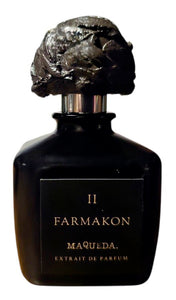
The drowned monk’s body is bloated, its fat turned to soap in his watery grave. His crime was revealing the apothecary secrets of his order, in a scroll inscribed with the antidotes to poisonings.
This is privileged information that keeps the power with the friary, and he betrayed his vows.
Farmakon is the smell of his sad story: the odor of parchment, ink — and the wax from the flesh of a drowned man.
All about this fragrance
Vibe check
Farmakon suits a quiet evening absorbed in a difficult book, its ink and leather giving the room an austere, almost archival atmosphere. Rosemary cuts through the smoky darkness: the presence feels guarded and cerebral rather than inviting close conversation.
How to wear
Start with one light spray in cool weather, giving the smoky leather and sharp herbal character room to unfold without crowding the air. Maqueda recommends applying its fragrances to clothing because of their high raw-material concentrations; test first on an inconspicuous area of fabric.
Who it’s for
For wearers drawn to inky leather, assertive herbs and unsettling fragrance narratives. Farmakon appeals to a taste for severe, smoky compositions and experimental perfumery rather than sweetness or familiar comfort.
Release year
2025
The nose
Maqueda
Maqueda’s story
Maqueda is an independent Italian perfume house drawn to esotericism, ritual and the transformation of matter. Its experimental approach embraces darkness and decomposition, using high raw-material concentrations to create deliberate olfactory saturation rather than conventional polish.
Farmakon’s concept
Farmakon’s supplied narrative centres on a drowned monk punished for revealing his order’s secret antidotes. This fictional, macabre premise translates the forbidden manuscript and watery grave into impressions of parchment, ink and waxy flesh, placing monastic medicine at the centre of the fragrance’s imagery.
Extra info
The fragrance appears as FARMAKON in Fragrantica and II Farmakon in Parfumo. Its supplied story makes an antidote manuscript—not simply poison—the forbidden object at the heart of the narrative.
Out of stock£195.00, 50 ml Extrait de Parfum
£162.50 your price
Out of stock£150.00, 30 ml Extrait de Parfum
£125.00 your price
Out of stock£8.00, 1 ml Extrait de Parfum
£6.67 your price
Sample discount program
Out of stock8 tokens, 10 ml Extrait de Parfum
What's this? Learn more
Notesdementors breathinkleatherold manuscriptplague doctor coatrosemary
Tags
#beast
#smoky
Style
unisex
The drowned monk’s body is bloated, its fat turned to soap in his watery grave. His crime was revealing the apothecary secrets of his order, in a scroll inscribed with the antidotes to poisonings.
This is privileged information that keeps the power with the friary, and he betrayed his vows.
Farmakon is the smell of his sad story: the odor of parchment, ink — and the wax from the flesh of a drowned man.
All about this fragrance
Vibe check
Farmakon suits a quiet evening absorbed in a difficult book, its ink and leather giving the room an austere, almost archival atmosphere. Rosemary cuts through the smoky darkness: the presence feels guarded and cerebral rather than inviting close conversation.
How to wear
Start with one light spray in cool weather, giving the smoky leather and sharp herbal character room to unfold without crowding the air. Maqueda recommends applying its fragrances to clothing because of their high raw-material concentrations; test first on an inconspicuous area of fabric.
Who it’s for
For wearers drawn to inky leather, assertive herbs and unsettling fragrance narratives. Farmakon appeals to a taste for severe, smoky compositions and experimental perfumery rather than sweetness or familiar comfort.
Release year
2025
The nose
Maqueda
Maqueda’s story
Maqueda is an independent Italian perfume house drawn to esotericism, ritual and the transformation of matter. Its experimental approach embraces darkness and decomposition, using high raw-material concentrations to create deliberate olfactory saturation rather than conventional polish.
Farmakon’s concept
Farmakon’s supplied narrative centres on a drowned monk punished for revealing his order’s secret antidotes. This fictional, macabre premise translates the forbidden manuscript and watery grave into impressions of parchment, ink and waxy flesh, placing monastic medicine at the centre of the fragrance’s imagery.
Extra info
The fragrance appears as FARMAKON in Fragrantica and II Farmakon in Parfumo. Its supplied story makes an antidote manuscript—not simply poison—the forbidden object at the heart of the narrative.