Floral
Fruity
Notesamberblackcurrantjasminelemonmagnolianerolipatchoulipeachpearpink peppertonka beans
Tags
#fresh
#sexy
#sweet
Style
unisex
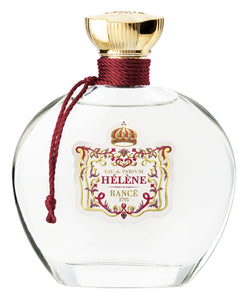
Hélène Napoleone was the daughter of Napoleon’s last lover, Albine de Montholon, and although it was never confirmed if the now-exiled Emperor was indeed her father, he did give her his name, so…? Her namesake fragrance is a vivacious bouquet of fruits and florals, headlined by sparkling pear and creamy magnolia. The charm deepens with the amber base, warmed by sandalwood and patchouli.
All about this fragrance
Vibe check
Hélène suits the moment when a lively afternoon conversation becomes more personal. Sparkling pear keeps the mood buoyant, while creamy white flowers and warm amber give the fragrance a softer, more intimate register as the distance between people narrows.
How to wear
Try it in mild spring weather or on a cooler summer evening, when the bright fruit and warm base can feel balanced. Begin with one or two sprays on the neck or upper chest; in warmer conditions, apply more lightly to keep the sweet floral bouquet from becoming too enveloping.
Who it’s for
For those who enjoy juicy fruit and creamy white flowers with a warm, sweet foundation. Hélène appeals to a taste for rounded, romantic fragrances in which pear and magnolia remain central, with amber, tonka bean and patchouli adding depth rather than turning the composition austere.
Release year
2010, revised 2015–2016
The nose
Giovanni Rancé is credited with the 2010 fragrance. As the house’s CEO and creative director, he connects its family heritage with contemporary perfume creation. This modern credit is distinct from the historical Hélène recipe attributed by the house to Jean Rancé; it does not establish authorship of the later reformulation.
Rance 1795’s story
Rancé 1795 connects its roots in Grasse with a family tradition continued in Italy. Preserved recipes and historical storytelling inform the house’s identity, while ongoing creative and scientific research allows that heritage to evolve rather than remain fixed in archival formulas.
Hélène’s concept
Hélène belongs to Rancé’s Napoleonic heritage narrative, recalling Hélène Napoleone, the daughter of Albine de Montholon, Napoleon’s last lover. Her paternity remains disputed. The house attributes a historical Hélène recipe to Jean Rancé and presents the fragrance as a tribute to romantic love; the modern eau de parfum should not be understood as an unchanged nineteenth-century composition.
Extra info
Hélène has appeared in materially different formulations: the 2010 version featured notes including cardamom, cinnamon, heliotrope and benzoin, while the current official pyramid centers on pear, magnolia, jasmine and an amber-tonka base. Hélène Élixir is a separate product, not another name for this eau de parfum.
Featured in edits and sample packs
Jiggy with Jasmine
Also featured in
For the Romantic
Notesamberblackcurrantjasminelemonmagnolianerolipatchoulipeachpearpink peppertonka beans
Tags
#fresh
#sexy
#sweet
Style
unisex
Hélène Napoleone was the daughter of Napoleon’s last lover, Albine de Montholon, and although it was never confirmed if the now-exiled Emperor was indeed her father, he did give her his name, so…? Her namesake fragrance is a vivacious bouquet of fruits and florals, headlined by sparkling pear and creamy magnolia. The charm deepens with the amber base, warmed by sandalwood and patchouli.
All about this fragrance
Vibe check
Hélène suits the moment when a lively afternoon conversation becomes more personal. Sparkling pear keeps the mood buoyant, while creamy white flowers and warm amber give the fragrance a softer, more intimate register as the distance between people narrows.
How to wear
Try it in mild spring weather or on a cooler summer evening, when the bright fruit and warm base can feel balanced. Begin with one or two sprays on the neck or upper chest; in warmer conditions, apply more lightly to keep the sweet floral bouquet from becoming too enveloping.
Who it’s for
For those who enjoy juicy fruit and creamy white flowers with a warm, sweet foundation. Hélène appeals to a taste for rounded, romantic fragrances in which pear and magnolia remain central, with amber, tonka bean and patchouli adding depth rather than turning the composition austere.
Release year
2010, revised 2015–2016
The nose
Giovanni Rancé is credited with the 2010 fragrance. As the house’s CEO and creative director, he connects its family heritage with contemporary perfume creation. This modern credit is distinct from the historical Hélène recipe attributed by the house to Jean Rancé; it does not establish authorship of the later reformulation.
Rance 1795’s story
Rancé 1795 connects its roots in Grasse with a family tradition continued in Italy. Preserved recipes and historical storytelling inform the house’s identity, while ongoing creative and scientific research allows that heritage to evolve rather than remain fixed in archival formulas.
Hélène’s concept
Hélène belongs to Rancé’s Napoleonic heritage narrative, recalling Hélène Napoleone, the daughter of Albine de Montholon, Napoleon’s last lover. Her paternity remains disputed. The house attributes a historical Hélène recipe to Jean Rancé and presents the fragrance as a tribute to romantic love; the modern eau de parfum should not be understood as an unchanged nineteenth-century composition.
Extra info
Hélène has appeared in materially different formulations: the 2010 version featured notes including cardamom, cinnamon, heliotrope and benzoin, while the current official pyramid centers on pear, magnolia, jasmine and an amber-tonka base. Hélène Élixir is a separate product, not another name for this eau de parfum.
Featured in edits and sample packs
Jiggy with Jasmine
Also featured in
For the Romantic