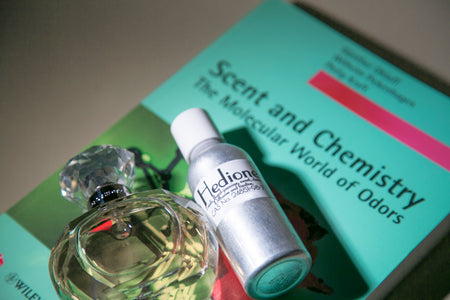
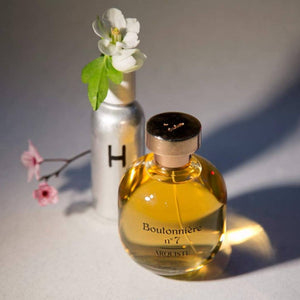
A sample pack for some scented detective work. Find out if you can detect hedione in the formulas of the perfumes in the selection having smelled the hedione molecules in the provided specimen.
Hedione is one of these aromachemicals that are in most formulas nowadays but which never gets mentioned directly in the list of notes. It's naturally a part of white florals (such as jasmine) metabolism but perfumers use it more for structure, reach and the volumizing effect rather than its faint floral/citrusy aroma.
The pack contains 7 x 1 ml samples:
- Sucre D’Ébène (Discontinued) by Pierre Guillaume Black CollectionMolecule added for transparent volume
- Bendito Beso (Discontinued) by Beso BeachMolecule used for abstract volume
- Lava Rose (Discontinued) by Strangers ParfumerieMolecule added for the slow-mo effect
- Boutonnière no.7 (Discontinued) by ArquisteMolecule as part of a white flower metabolism
- Noiressence by J.U.SMolecule added to separate heavy layers
- PG30 Alphaora by Pierre Guillaume - Parfumerie GénéraleHedione as a silky curtain between notes
- +Hedione solution (10% strength) / Reference material
Read more about why these perfumes best illustrate the theme in the "Detecting hedione" editor pick.
This sample pack is available as a standalone product, and also was part of our year long subscription service.
All about this fragrance
Detecting hedione pack’s concept
This pack was curated around an ingredient that often works behind the scenes. Naturally associated with white florals such as jasmine, hedione is used by perfumers as much for structure, reach and volume as for its faint floral-citrusy aroma. Pairing a hedione specimen with a selection of perfumes gives that usually unlisted material a reference point, inviting wearers to investigate its presence and contribution for themselves.
Will it suit you?
Couldn’t load your stylist’s take.
Set up your scent profile and your stylist will tell you honestly whether Detecting hedione pack is you.
How your fit is worked out
- 1
Reads your profile
What you told us, the voice you picked, and the fragrances you’ve bought and rated.
- 2
Compares it with this fragrance
Notes, structure and strength, and how similar fragrances landed with you.
- 3
Writes a verdict in your character’s voice
A fit from “Strong fit” to “Not for you”, with the reasons, at your reading length.
The fit scale
Your stylist is an AI, so treat the verdict as an informed opinion, not a promise. The surest test is still skin: most fragrances come as a 1 ml sample.
A sample pack for some scented detective work. Find out if you can detect hedione in the formulas of the perfumes in the selection having smelled the hedione molecules in the provided specimen.
Hedione is one of these aromachemicals that are in most formulas nowadays but which never gets mentioned directly in the list of notes. It's naturally a part of white florals (such as jasmine) metabolism but perfumers use it more for structure, reach and the volumizing effect rather than its faint floral/citrusy aroma.
The pack contains 7 x 1 ml samples:
- Sucre D’Ébène (Discontinued) by Pierre Guillaume Black CollectionMolecule added for transparent volume
- Bendito Beso (Discontinued) by Beso BeachMolecule used for abstract volume
- Lava Rose (Discontinued) by Strangers ParfumerieMolecule added for the slow-mo effect
- Boutonnière no.7 (Discontinued) by ArquisteMolecule as part of a white flower metabolism
- Noiressence by J.U.SMolecule added to separate heavy layers
- PG30 Alphaora by Pierre Guillaume - Parfumerie GénéraleHedione as a silky curtain between notes
- +Hedione solution (10% strength) / Reference material
Read more about why these perfumes best illustrate the theme in the "Detecting hedione" editor pick.
This sample pack is available as a standalone product, and also was part of our year long subscription service.
All about this fragrance
Detecting hedione pack’s concept
This pack was curated around an ingredient that often works behind the scenes. Naturally associated with white florals such as jasmine, hedione is used by perfumers as much for structure, reach and volume as for its faint floral-citrusy aroma. Pairing a hedione specimen with a selection of perfumes gives that usually unlisted material a reference point, inviting wearers to investigate its presence and contribution for themselves.